The modern day anti-hero is in our midst, upon the TV screen: Jersey Shore's Angelina "Jolie" Pivarnick.
But Knuttel, one might say, how could this possibly be?
It's quite simple, really.
First off, no one on the program displays true heroic qualities. None of them have any explicit virtue or anything like that. They may display "jerk with a heart of gold" qualities, but that rarely ever extends beyond their "family" or anyone else allowed within their group. This too extends to Angelina.
So what does she do that makes her heroic, in an anti-hero kind of way?
She remains (or at least remained).
She was an early departure on the first season, leaving the rest of the cast to bond without her. Sure, she did an annoying thing or two (notably cock blocking Mike and Pauly D in an extremely obvious way), but the whole cast annoys each other really. They're all immature, annoying assholes. It's what they do.
So why then does Angelina get outcast as such? Sure, she wasn't there for the first season, but that didn't stop the cast from accepting other second season people, such as her friend Jose.
Week in and week out she continuously took shit from the rest of the cast. She slowly worked at gaining their trust, only to have it taken back in a quarter of the time for something usually trivial, something any other cast member would be just as likely to do -- in the hot tub with Vinny's uncle hitting the ball into Snooki's face could easily be an accident, especially with someone who would probably not be very athletic or coordinated, something that Snooki could have very easily done to Angelina (except she would've brushed it off as nothing and no one would have left the hot tub terribly upset).
Among other things held against her was Vinny taking offense to Angelina saying that JWoww is talking about how drunk Pauly is, saying it like, "she's talking shit," when it's closer to, "she's talking a matter of factly, with little inflection of criticism." This of course leads to a fight. Later after a long dispute between her and Vinny, they end up drunkenly sleeping together. Vinny later states this act as doing it so he has something against her. Let me say that again, Vinny slept with Angelina so he could later hold it against her. How evil is that? Anyways, this comes within a day of Angelina saying she slept with Jose, when she didn't, leading to the later vitriolic accusation of sluttery -- you slept with two dudes under 24 hours. Nevermind the fact that MVP (Mike, Vinny, and Pauly) are either aspiring to or successfully doing this with their respective opposite gender the entire Miami stay.
And then the hammer comes down on her in the form of Mike, formalizing his anger against her and urging every second for her exit. JWoww offers advice to just stay and deal with it, Mike is an asshole, but the damage is done. The pressure is too great, as Mike is a forceful asshole who believes his opinions are synonymous with those of the rest of the house, and besides the advice, she gets no support.
The impetus behind the final argument is a misplaced menstrual pad, though I suspect it was moved by MTV's cameramen or staff. While I believe she is a sloppy and dirty person, I have a hard time believing someone would purposely do something like that -- leaving the alternate hypothesis to be something accidental, like as if she threw it at the trash can, it failed to make it in, and she didn't look back (which is still very dirty). Either way she had deniability.
In any case, her only true crime is being herself. She refused to submit in a culture of misogyny. Simply look at the relatively subdued personalities of the other female cast members, as well as the very one sided accusations of slutty behavior (Mike, for instance, is never criticized for sleeping with many women, rather sleeping with ugly women).
In summary: she is ostracized mainly for not fitting in, and takes abuse from the other house mates on a daily basis for doing this. For refusing to be someone besides herself (when all options are rather morally neutral at best), she is the modern anti-hero. At the very least, she carries the hero's burden. She doesn't want to simply be another guidette, she wants to be Angelina the guidette, and for this she should be commended.
-- Knuttel
10.02.2010


9.29.2010
9.26.2010
The downfall of western society: a Pixar story
So I finally saw Finding Nemo.
I was dissappointed, but not really. I didn't like it, but it was standard Pixar fare.
Without further ado, I shall now let loose my anger upon Pixar.
All they make are treacly little Oscar-bait pictures. The funny part, of course, is they'll likely never win any best picture Oscars for doing this, as animated pictures rarely ever win the best picture Oscar. Though animated Oscar-bait pictures are usually much more likely to make money than non-animated ones -- plus lower production costs; theyre running to the bank.
But my point is they don't challenge the medium in any way other than technical. They don't treat it like an art, they treat it like an exercise. All the stories are the same tug-at-your-heartstrings bullshit. Oddly enough, all the stories also have a very anti-human message.
I shall go through this latter part in list format, using the list of Pixar films made, according to wikipedia.
Toy Story, 1995 -- While the conflict is mostly between Buzz and Woody, it is brought up mostly by Andy the human kid's temporary taste in toys. Also, there's the kid next door who terrorizes and destroys all toys, though he would be considered a minor-antagonist. Add in the fact that humans aren't supposed to see the toys move ever, and really any human is an enemy of some kind in this movie.
A Bug's Life, 1998 -- I don't remember anything about this movie. It sucked too much for me. Plus it was a blatant knockoff of Dreamworks' 1998 movie Antz. Funny thing is when Dreamworks goes toe to toe with Pixar on films of comparable quality, Dreamworks usually makes the better film. This is the beginning of this trend. Are people even in this movie? Oh man, that's the most evil of all.
Toy Story 2, 1999 -- Already going into the sequel well on their third effort, the antagonist in this mediocre movie is the toy collector.
Monsters, inc., 2001 -- I don't really remember this movie, but I think the antagonist in this movie was the little kid that runs around the monster city.
Finding Nemo, 2003 -- The main antagonist in this movie is the Sydney dentist (how an ocean clown fish managed to survive the trip from the Great Barrier Reef to Sydney is beyond me). All the oceanic "enemies" were merely plot obstacles (were the jellyfish ever aware of their presence?). It is also one of the first movies to make a dramatic stand against people and what people stand for explicity, criticizing the "stealing" of fish from their natural environments, and really people "invading" upon any oceanic habitat. Also, anyone notice how the final "obstacle" was a fishing boat, of which the fish were at least aware of fishing grounds? Not to mention a clown fish would probably get tossed overboard during the sorting process as by-catch. Also, even though Shark Tales was decidedly mediocre, it was still better than this.
The Incredibles, 2004 -- The antagonist is, at first, the humans who ban superhero activities in public. This is used as a plot device to set up the main antagonist, a normal human who captures and fights superheroes with his robots.
Cars, 2006 -- I could only stand about 5 minutes of this crapfest. Too many awful car puns. Anyways, I don't even think humans exist in the "Cars" universe. What is the purpose of a car's existence then, if not to propel the driver? Thus, existentially, humans are, too, the enemy.
Ratatouille, 2007 -- The enemy in this movie is every human which attempts to stop a single rat's attempts at becoming a chef.
WALL-E, 2008 -- The antagonist in this movie is natural human sloth. As people develop better and better technology, they become lazier and lazier, ultimately turning earth into a trash pile. The robots running the ship realize this, using it as their reason to keep the humans away from earth, even though it can now "support" life. Kung Fu Panda was superior to this film in every single way, even in only the first five minutes.
Up, 2009 -- Never saw it, don't plan on seeing it, but I can bet you there's an indictment against humankind somewhere in there.
Toy Story 3, 2010 -- The third sequel of the Toy Story franchise, it improves upon the second one. Humans exist as the usual background foe, special emphasis placed upon the little kids who destroy and go through toys, not understanding their limits. The main antagonist is mob-boss of the daycare, Lotso Hugs, but all of the conflict in this movie is driven by abandonment issues the toys feel from their human masters.
So there you go, Pixar hates people. I expect a Pixar remake of Soylent Green, rewritten as a feel good story.
-- Knuttel
I was dissappointed, but not really. I didn't like it, but it was standard Pixar fare.
Without further ado, I shall now let loose my anger upon Pixar.
All they make are treacly little Oscar-bait pictures. The funny part, of course, is they'll likely never win any best picture Oscars for doing this, as animated pictures rarely ever win the best picture Oscar. Though animated Oscar-bait pictures are usually much more likely to make money than non-animated ones -- plus lower production costs; theyre running to the bank.
But my point is they don't challenge the medium in any way other than technical. They don't treat it like an art, they treat it like an exercise. All the stories are the same tug-at-your-heartstrings bullshit. Oddly enough, all the stories also have a very anti-human message.
I shall go through this latter part in list format, using the list of Pixar films made, according to wikipedia.
Toy Story, 1995 -- While the conflict is mostly between Buzz and Woody, it is brought up mostly by Andy the human kid's temporary taste in toys. Also, there's the kid next door who terrorizes and destroys all toys, though he would be considered a minor-antagonist. Add in the fact that humans aren't supposed to see the toys move ever, and really any human is an enemy of some kind in this movie.
A Bug's Life, 1998 -- I don't remember anything about this movie. It sucked too much for me. Plus it was a blatant knockoff of Dreamworks' 1998 movie Antz. Funny thing is when Dreamworks goes toe to toe with Pixar on films of comparable quality, Dreamworks usually makes the better film. This is the beginning of this trend. Are people even in this movie? Oh man, that's the most evil of all.
Toy Story 2, 1999 -- Already going into the sequel well on their third effort, the antagonist in this mediocre movie is the toy collector.
Monsters, inc., 2001 -- I don't really remember this movie, but I think the antagonist in this movie was the little kid that runs around the monster city.
Finding Nemo, 2003 -- The main antagonist in this movie is the Sydney dentist (how an ocean clown fish managed to survive the trip from the Great Barrier Reef to Sydney is beyond me). All the oceanic "enemies" were merely plot obstacles (were the jellyfish ever aware of their presence?). It is also one of the first movies to make a dramatic stand against people and what people stand for explicity, criticizing the "stealing" of fish from their natural environments, and really people "invading" upon any oceanic habitat. Also, anyone notice how the final "obstacle" was a fishing boat, of which the fish were at least aware of fishing grounds? Not to mention a clown fish would probably get tossed overboard during the sorting process as by-catch. Also, even though Shark Tales was decidedly mediocre, it was still better than this.
The Incredibles, 2004 -- The antagonist is, at first, the humans who ban superhero activities in public. This is used as a plot device to set up the main antagonist, a normal human who captures and fights superheroes with his robots.
Cars, 2006 -- I could only stand about 5 minutes of this crapfest. Too many awful car puns. Anyways, I don't even think humans exist in the "Cars" universe. What is the purpose of a car's existence then, if not to propel the driver? Thus, existentially, humans are, too, the enemy.
Ratatouille, 2007 -- The enemy in this movie is every human which attempts to stop a single rat's attempts at becoming a chef.
WALL-E, 2008 -- The antagonist in this movie is natural human sloth. As people develop better and better technology, they become lazier and lazier, ultimately turning earth into a trash pile. The robots running the ship realize this, using it as their reason to keep the humans away from earth, even though it can now "support" life. Kung Fu Panda was superior to this film in every single way, even in only the first five minutes.
Up, 2009 -- Never saw it, don't plan on seeing it, but I can bet you there's an indictment against humankind somewhere in there.
Toy Story 3, 2010 -- The third sequel of the Toy Story franchise, it improves upon the second one. Humans exist as the usual background foe, special emphasis placed upon the little kids who destroy and go through toys, not understanding their limits. The main antagonist is mob-boss of the daycare, Lotso Hugs, but all of the conflict in this movie is driven by abandonment issues the toys feel from their human masters.
So there you go, Pixar hates people. I expect a Pixar remake of Soylent Green, rewritten as a feel good story.
-- Knuttel
9.24.2010
interesting op-ed articles
http://www.nytimes.com/2010/09/24/opinion/24krugman.html?_r=2&src=me&ref=general
http://www.nytimes.com/2010/09/24/opinion/24chernow.html?src=ISMR_AP_LO_MST_FB
i'll prolly synthesize the information later on, but i'll just stick it up for now
-- knuttel
http://www.nytimes.com/2010/09/24/opinion/24chernow.html?src=ISMR_AP_LO_MST_FB
i'll prolly synthesize the information later on, but i'll just stick it up for now
-- knuttel
9.23.2010
The Demise of Politics
So the repealing of "don't ask, don't tell" failed miserably. Regardless of opinions of the matter, it showed a complete failure in the political process as it it practiced by today's Senate.
Instead of just proposing the bill as a straight vote on what would seem to be a straightforward issue regarding policy, it was attached to the defense spending bill. As the constitution states, the Senate can only affect the military by (officially) declaring war and ratifying treaties. However, the Senate can also control spending, of which the military requires to survive.
This means the bill is no longer about the issue of whether or not gays should be allowed to serve in the military. No, the bill is now the military budget, and includes something about repealing the policy.
This means that voting against taking away "don't ask, don't tell" is now "voting against the military."
Naturally, the Senate republicans want to pass the military budget, so in order to attempt a compromise, they ask for 20 amendments. What they are, I do not know, but Senate majority leader only included one of them in the final bill.
So now the bill needs 60 votes to pass, because the Republicans are threatening a filibuster if it goes to the floor. The bill looks like it will only get 59 votes, so it just gets dropped.
So misaimed politicking and exclusion doomed the actual passing of this, which by the way an overwhelming majority of Americans would support.
Maybe the moderate Republicans in the house would've voted to get rid of this, but because they were shut out of the discussion on an even larger matter, they refused to cooperate yet again. Of course, it's a given that cooperation is not guaranteed, but I can guarantee that John McCain filibustering a straight vote on an issue like that would not go over well for the entire party. A single action like that could have easily evaporated moderate and independent support in a very hyped election season -- really making the vote something more of an inevitability, a postponement.
Now with the rise of the tea partiers, and their subsequent foray into social conservatism (which, you know, really has a lot to do with their original libertarian stance on limiting government), this could remain an issue for longer.
Frankly I don't understand how "don't ask, don't tell" could even be supported in any context other than maybe the original context -- which was much more limited in scope (basically just don't go to a gay pride parade wearing your uniform) -- not if they are found to have a same sex spouse, or are found in the midst of a homosexual act, or have their emails and other private life items invaded to force one out of the closet and ending their career.
How can we turn away able bodied soldiers, or at the very least force them to live a lie (and hope they don't get caught) in order to serve and protect their country?
-- Knuttel
Instead of just proposing the bill as a straight vote on what would seem to be a straightforward issue regarding policy, it was attached to the defense spending bill. As the constitution states, the Senate can only affect the military by (officially) declaring war and ratifying treaties. However, the Senate can also control spending, of which the military requires to survive.
This means the bill is no longer about the issue of whether or not gays should be allowed to serve in the military. No, the bill is now the military budget, and includes something about repealing the policy.
This means that voting against taking away "don't ask, don't tell" is now "voting against the military."
Naturally, the Senate republicans want to pass the military budget, so in order to attempt a compromise, they ask for 20 amendments. What they are, I do not know, but Senate majority leader only included one of them in the final bill.
So now the bill needs 60 votes to pass, because the Republicans are threatening a filibuster if it goes to the floor. The bill looks like it will only get 59 votes, so it just gets dropped.
So misaimed politicking and exclusion doomed the actual passing of this, which by the way an overwhelming majority of Americans would support.
Maybe the moderate Republicans in the house would've voted to get rid of this, but because they were shut out of the discussion on an even larger matter, they refused to cooperate yet again. Of course, it's a given that cooperation is not guaranteed, but I can guarantee that John McCain filibustering a straight vote on an issue like that would not go over well for the entire party. A single action like that could have easily evaporated moderate and independent support in a very hyped election season -- really making the vote something more of an inevitability, a postponement.
Now with the rise of the tea partiers, and their subsequent foray into social conservatism (which, you know, really has a lot to do with their original libertarian stance on limiting government), this could remain an issue for longer.
Frankly I don't understand how "don't ask, don't tell" could even be supported in any context other than maybe the original context -- which was much more limited in scope (basically just don't go to a gay pride parade wearing your uniform) -- not if they are found to have a same sex spouse, or are found in the midst of a homosexual act, or have their emails and other private life items invaded to force one out of the closet and ending their career.
How can we turn away able bodied soldiers, or at the very least force them to live a lie (and hope they don't get caught) in order to serve and protect their country?
-- Knuttel
9.17.2010
Stuff
I probably intended on using these as links/references for my last post, so I'll just haphazardly put them down now.
http://news.yahoo.com/s/yblog_upshot/20100915/el_yblog_upshot/tea-party-victory-endangers-gops-goal-of-retaking-the-senate
http://tpmdc.talkingpointsmemo.com/2010/09/conservatives-trash-karl-rove-after-he-insists.php?ref=fpa
The latter I see directly correlating, however the former perhaps may have been an egg for a follow-up post. I dunno.
-- Knuttel
http://news.yahoo.com/s/yblog_upshot/20100915/el_yblog_upshot/tea-party-victory-endangers-gops-goal-of-retaking-the-senate
http://tpmdc.talkingpointsmemo.com/2010/09/conservatives-trash-karl-rove-after-he-insists.php?ref=fpa
The latter I see directly correlating, however the former perhaps may have been an egg for a follow-up post. I dunno.
-- Knuttel
9.16.2010
Division
Let's take a break from sports for a little bit. It's getting repetitive anyway.
There is a great political movement occurring right now, the tea party. When it first started, it seemed easy to write it off as a fringe movement, relegate it to third party status.
Instead of becoming a third party, they simply became something similar to a PAC. They either fielded or supported candidates from both parties, at least initially. Public figures, all of whom could be described in some manner as "Washington outsiders" started taking charge of the party.
The tea party grew increasingly on a more and more conservative base. Originally, it appeared to be made from libertarians who were fed up with being on the outside looking in as the government grew larger. Other right wing oriented groups latched on, also on the outside since the democrats took control of both electable houses of government in 2008.
And while the economic crisis continues, anger grows; more and more people become dissatisfied with the manner in which the country is run. The tea party becomes a symbol of those who feel ignored by the government, who feel even when they vote for the old party line, they vote for the same thing.
That is how Christine O Donnell beat Mike Castle for the republican senate candidate in Delaware.
By all accounts, Mike Castle had no reason to lose. He was a moderate republican in a Northeastern state. He had a long and competent service record -- currently serving as Delaware's lone house member, also served as Governor and Lieutenant-Governor. Aside from espousing the view that our President was born in the U.S.A., there shouldn't have been any issues, and he likely would have had the support of many democrats, winning the Senate seat.
But that's precisely why he didn't win. The tea party has taken over the right wing of the republican party, adding social conservatism along the way. Simply having a long government career was disastrous, no matter how long or esteemed. Not dealing well with conspiracy theorists also doesn't help when fringe movements close in on a party.
So now all of a sudden, Delaware is a race. What was sure to be a seat for Mike Castle and the republicans is now fair game to both parties.
O Donnel had previously run in the 2006 Primaries for Senate, and also ran on the main ticket in 2008 against Joe Biden. She lost on both occasions, but now has tea party steam backing her up. She's stood for some socially crazy positions, claiming to base it on religion (seeing as how I too am a catholic, I know she's full of shit), and etc, but I'm not gonna point that all out. I'll just direct you to a video which should be up in many places of her on a '90s MTV special when she was in her twenties.
I went to her website to try and figure out what exactly her positions are on anything, and well, I got this. Yeah, it just asks for donations, and doesn't say anything about her campaign or what she stands for. Even funnier, if you click to the next screen, it doesn't have her updated goal of $1,000,000 posted. For a movement that seems to have sprung quickly with the aid of the internet, I am really disappointed in a website like this one.
Why do I care about this? I don't live in Delaware, after all. Well, I live close enough. What happens in Delaware can effect me, and what happens in Delaware could also be a indicator of what is to come in southeastern PA politics. In addition, driving on I-95 in Delaware is already an unpleasant experience, and I do not want this to be even more unpleasant cos some crazy doesn't want to pay maintenance on it. I could decide it's fiscally irresponsible for me to pay car insurance, that doesn't mean I don't need it to drive my car, and doesn't reflect anything about fiscal responsibility.
Maybe conservatives want Obama, Pelosi, and Reid to be the figureheads of the democratic party in 2012, but I think liberals would likewise be interested to see Palin, O Donnel, and Angle as figureheads of the republicans.
What the hell ever happened to constructive lawmaking? You can't fix anything if you can't agree damnit.
There is a great political movement occurring right now, the tea party. When it first started, it seemed easy to write it off as a fringe movement, relegate it to third party status.
Instead of becoming a third party, they simply became something similar to a PAC. They either fielded or supported candidates from both parties, at least initially. Public figures, all of whom could be described in some manner as "Washington outsiders" started taking charge of the party.
The tea party grew increasingly on a more and more conservative base. Originally, it appeared to be made from libertarians who were fed up with being on the outside looking in as the government grew larger. Other right wing oriented groups latched on, also on the outside since the democrats took control of both electable houses of government in 2008.
And while the economic crisis continues, anger grows; more and more people become dissatisfied with the manner in which the country is run. The tea party becomes a symbol of those who feel ignored by the government, who feel even when they vote for the old party line, they vote for the same thing.
That is how Christine O Donnell beat Mike Castle for the republican senate candidate in Delaware.
By all accounts, Mike Castle had no reason to lose. He was a moderate republican in a Northeastern state. He had a long and competent service record -- currently serving as Delaware's lone house member, also served as Governor and Lieutenant-Governor. Aside from espousing the view that our President was born in the U.S.A., there shouldn't have been any issues, and he likely would have had the support of many democrats, winning the Senate seat.
But that's precisely why he didn't win. The tea party has taken over the right wing of the republican party, adding social conservatism along the way. Simply having a long government career was disastrous, no matter how long or esteemed. Not dealing well with conspiracy theorists also doesn't help when fringe movements close in on a party.
So now all of a sudden, Delaware is a race. What was sure to be a seat for Mike Castle and the republicans is now fair game to both parties.
O Donnel had previously run in the 2006 Primaries for Senate, and also ran on the main ticket in 2008 against Joe Biden. She lost on both occasions, but now has tea party steam backing her up. She's stood for some socially crazy positions, claiming to base it on religion (seeing as how I too am a catholic, I know she's full of shit), and etc, but I'm not gonna point that all out. I'll just direct you to a video which should be up in many places of her on a '90s MTV special when she was in her twenties.
I went to her website to try and figure out what exactly her positions are on anything, and well, I got this. Yeah, it just asks for donations, and doesn't say anything about her campaign or what she stands for. Even funnier, if you click to the next screen, it doesn't have her updated goal of $1,000,000 posted. For a movement that seems to have sprung quickly with the aid of the internet, I am really disappointed in a website like this one.
Why do I care about this? I don't live in Delaware, after all. Well, I live close enough. What happens in Delaware can effect me, and what happens in Delaware could also be a indicator of what is to come in southeastern PA politics. In addition, driving on I-95 in Delaware is already an unpleasant experience, and I do not want this to be even more unpleasant cos some crazy doesn't want to pay maintenance on it. I could decide it's fiscally irresponsible for me to pay car insurance, that doesn't mean I don't need it to drive my car, and doesn't reflect anything about fiscal responsibility.
Maybe conservatives want Obama, Pelosi, and Reid to be the figureheads of the democratic party in 2012, but I think liberals would likewise be interested to see Palin, O Donnel, and Angle as figureheads of the republicans.
What the hell ever happened to constructive lawmaking? You can't fix anything if you can't agree damnit.
9.15.2010
Clarity
I should clarify, perhaps, how the two items in the previous article are related.
The NCAA is going after players who engage in activities which somehow correlate to them getting paid to play football. As an amateur organization, this is forbidden, and players will be dealt with accordingly (usually ruled ineligible, sometimes after the fact).
The NFL has no minor league or developmental league of any kind. Essentially, they draft players from the college ranks (with a few rare exceptions, defensive tackle Eric Swann comes to mind). With the NFL expanding its regular season to 18 games, and decreasing its preseason games to 2, it will be more difficult to ascertain how valuable these fringe players are on a roster. These fringe players are made up of undrafted rookies, late round picks, and career special teamers.
In order to actually develop these players, evaluate how they play in a professional environment, the NFL will have to develop some sort of minor league system. Having it a separate league entirely, such as the UFL seems troublesome and meddlesome. Every other league plays by rules that are either too different or simply doesn't draw the kind of talent required to garner attention. Expanding the practice squad to full size and have the practice squads play each other seems like a good idea, it could be like the reserve system in European soccer.
Frankly, I don't see why the college players aren't paid if they are making so much money for the school. I realize most of what colleges do simply doesn't make money, at least not real money. Research universities can draw in federal money for research grants. Even in this case the professors and research aides are all paid for their time.
Whatevs, I'm starting to get rambly. Time for me to move to other topics.
-- Knuttel
The NCAA is going after players who engage in activities which somehow correlate to them getting paid to play football. As an amateur organization, this is forbidden, and players will be dealt with accordingly (usually ruled ineligible, sometimes after the fact).
The NFL has no minor league or developmental league of any kind. Essentially, they draft players from the college ranks (with a few rare exceptions, defensive tackle Eric Swann comes to mind). With the NFL expanding its regular season to 18 games, and decreasing its preseason games to 2, it will be more difficult to ascertain how valuable these fringe players are on a roster. These fringe players are made up of undrafted rookies, late round picks, and career special teamers.
In order to actually develop these players, evaluate how they play in a professional environment, the NFL will have to develop some sort of minor league system. Having it a separate league entirely, such as the UFL seems troublesome and meddlesome. Every other league plays by rules that are either too different or simply doesn't draw the kind of talent required to garner attention. Expanding the practice squad to full size and have the practice squads play each other seems like a good idea, it could be like the reserve system in European soccer.
Frankly, I don't see why the college players aren't paid if they are making so much money for the school. I realize most of what colleges do simply doesn't make money, at least not real money. Research universities can draw in federal money for research grants. Even in this case the professors and research aides are all paid for their time.
Whatevs, I'm starting to get rambly. Time for me to move to other topics.
-- Knuttel
9.14.2010
How is it?
http://www.washingtonpost.com/wp-dyn/content/article/2010/09/09/AR2010090906372.html?nav=rss_email/components
How is it the NCAA can get away with this?
I realize the specifics regarding this case are vague, but that's precisely what's leaving this player in limbo. I realize the main purpose of college is to provide education.
However, it is clear that in this case, the player will do little else immediately after graduation besides try to play professional football. His jersey wasn't sold for terribly more than it would be worth anyway (ebay that jersey, and it would probably get over a grand). And the NCAA sells his jersey anyway, and keeps all the money from it.
The fact of the matter is the major sports (football and basketball, usually men's but sometimes women's) make a shitton of money for the NCAA and their respective schools. The players, those who produce this money, see little of it.
Assume that a semester at a public university costs $20,000, including everything. That makes a full ride worth $40,000 plus a few field trips. Let's say it's a private university, and everything costs twice as much, that makes it $80,000 the university is giving them.
The NFL rookie minimum salary in 2007 was $285,000, and it has probably risen slightly since then.
Athletics is a field in which there is not much time to make your money. These players are forgoing prime (or developmental depending on the person/position, either way important) years of their life on what amounts to a 4 year internship.
Switching gears, the NFL has also recently stated the season will soon go to 18 games, replacing two of the four preseason games with regular season ones. This kills rookies and fringe players chances of making the team and understanding the game. The NFL would do well to create some sort of minor league to facilitate this development and retainment that they are otherwise sorely losing. The NHL has the AHL, and MLB has the minor league system, hell even the NBA has some semblance of a minor league system in the d-league. The NFL has none of that. They have other leagues that don't pay as much, and often play with very different rules and formats -- The CFL has 12 on 12 football with 3 downs to get 10 yards, the Arena Football League encourages iron-man style play with it's archaic substitution system, and the UFL eschews popular NFL rules such as the tuck rule and a different form of intentional grounding.
The NFL risks collapsing under its own weight if it doesn't make some sort of change regarding this. This has nothing to do with my personal squabbles and boycott of the NFL. If the NFL doesn't amend itself in this way, it can very well lose the relevance it so enjoys -- maybe even people will discover the variety of non-NFL football during a lockout, which could damage its brand (think people discovering faster-paced European hockey with NHL level athletes during its lockout year).
Something's gotta give
-- Knuttel
How is it the NCAA can get away with this?
I realize the specifics regarding this case are vague, but that's precisely what's leaving this player in limbo. I realize the main purpose of college is to provide education.
However, it is clear that in this case, the player will do little else immediately after graduation besides try to play professional football. His jersey wasn't sold for terribly more than it would be worth anyway (ebay that jersey, and it would probably get over a grand). And the NCAA sells his jersey anyway, and keeps all the money from it.
The fact of the matter is the major sports (football and basketball, usually men's but sometimes women's) make a shitton of money for the NCAA and their respective schools. The players, those who produce this money, see little of it.
Assume that a semester at a public university costs $20,000, including everything. That makes a full ride worth $40,000 plus a few field trips. Let's say it's a private university, and everything costs twice as much, that makes it $80,000 the university is giving them.
The NFL rookie minimum salary in 2007 was $285,000, and it has probably risen slightly since then.
Athletics is a field in which there is not much time to make your money. These players are forgoing prime (or developmental depending on the person/position, either way important) years of their life on what amounts to a 4 year internship.
Switching gears, the NFL has also recently stated the season will soon go to 18 games, replacing two of the four preseason games with regular season ones. This kills rookies and fringe players chances of making the team and understanding the game. The NFL would do well to create some sort of minor league to facilitate this development and retainment that they are otherwise sorely losing. The NHL has the AHL, and MLB has the minor league system, hell even the NBA has some semblance of a minor league system in the d-league. The NFL has none of that. They have other leagues that don't pay as much, and often play with very different rules and formats -- The CFL has 12 on 12 football with 3 downs to get 10 yards, the Arena Football League encourages iron-man style play with it's archaic substitution system, and the UFL eschews popular NFL rules such as the tuck rule and a different form of intentional grounding.
The NFL risks collapsing under its own weight if it doesn't make some sort of change regarding this. This has nothing to do with my personal squabbles and boycott of the NFL. If the NFL doesn't amend itself in this way, it can very well lose the relevance it so enjoys -- maybe even people will discover the variety of non-NFL football during a lockout, which could damage its brand (think people discovering faster-paced European hockey with NHL level athletes during its lockout year).
Something's gotta give
-- Knuttel
NCAA Week 2
So the second week of 11 on 11 football has come to pass.
-- Penn State needs to fix the run game somehow. Logic dictates that it shouldn't be Royster, but logic also saw the offensive line pass blocking very effectively. Pass blocking and run blocking aren't directly related, but they're close enough. Against 'Bama, they get somewhat of a pass, but they need to get their ass in gear.
-- Bolden, again, didn't look terrible. However, I get the suspicion that the coaches are unwilling to hand the offense over to him. His offense was very vanilla.
-- Newsome actually looked better than Bolden in the one series he played. The ball was turned over on a wide receiver reverse screen, so we didn't get to see if he could finish a drive, something Bolden struggled with mightily.
-- Speaking of which, Redzone offense sucked. One field goal is unacceptable, regardless of opponent. Scoring 3 points leaves you unlikely to win in any scenario.
-- Does Kevin Newsome have Allen Iverson syndrome? (Practice, you talking about practice? practice? I'm talking about the game!)
-- I see Penn State as a middle of the road Big Ten team this year, though recently they've usually been only upper mid-tier, so that's really not that much of a change. They're clearly not beating either Ohio State or Iowa, and could easily lose to a Michigan or Northwestern. Even an upset to Temple wouldn't be entirely unforseeable.
-- The ACC is looking terrible. Last week Va Tech lost to Boise State, which seemed like it could go either way. But this week Va Tech lost to FCS James Madison, Georgia Tech lost to Kansas, who lost to a 1-AA opponent to open their season, Florida State got trounced by Oklahoma, and Miami lost to Ohio State. Did I miss anything?
-- Virginia held in for longer than expected against USC. They have a shot at beating Va Tech this year for the commonwealth cup.
-- Boise State's victory against Va Tech has been sadly made more unimpressive by Va Tech's loss this weak. It's really a shame you never really know what you're going to get when you attempt to schedule strong out of conference opponents. They attempted to schedule tough and prove themselves, and their opponents haven't bothered as much to do the same. Other big name opponent, Oregon State, lost their opener to fellow mid-major powerhouse TCU.
-- NCAA division 1-A (FBS) needs to get a playoff system. It's not like it takes away the meaning of games anyway.
-- Penn State needs to fix the run game somehow. Logic dictates that it shouldn't be Royster, but logic also saw the offensive line pass blocking very effectively. Pass blocking and run blocking aren't directly related, but they're close enough. Against 'Bama, they get somewhat of a pass, but they need to get their ass in gear.
-- Bolden, again, didn't look terrible. However, I get the suspicion that the coaches are unwilling to hand the offense over to him. His offense was very vanilla.
-- Newsome actually looked better than Bolden in the one series he played. The ball was turned over on a wide receiver reverse screen, so we didn't get to see if he could finish a drive, something Bolden struggled with mightily.
-- Speaking of which, Redzone offense sucked. One field goal is unacceptable, regardless of opponent. Scoring 3 points leaves you unlikely to win in any scenario.
-- Does Kevin Newsome have Allen Iverson syndrome? (Practice, you talking about practice? practice? I'm talking about the game!)
-- I see Penn State as a middle of the road Big Ten team this year, though recently they've usually been only upper mid-tier, so that's really not that much of a change. They're clearly not beating either Ohio State or Iowa, and could easily lose to a Michigan or Northwestern. Even an upset to Temple wouldn't be entirely unforseeable.
-- The ACC is looking terrible. Last week Va Tech lost to Boise State, which seemed like it could go either way. But this week Va Tech lost to FCS James Madison, Georgia Tech lost to Kansas, who lost to a 1-AA opponent to open their season, Florida State got trounced by Oklahoma, and Miami lost to Ohio State. Did I miss anything?
-- Virginia held in for longer than expected against USC. They have a shot at beating Va Tech this year for the commonwealth cup.
-- Boise State's victory against Va Tech has been sadly made more unimpressive by Va Tech's loss this weak. It's really a shame you never really know what you're going to get when you attempt to schedule strong out of conference opponents. They attempted to schedule tough and prove themselves, and their opponents haven't bothered as much to do the same. Other big name opponent, Oregon State, lost their opener to fellow mid-major powerhouse TCU.
-- NCAA division 1-A (FBS) needs to get a playoff system. It's not like it takes away the meaning of games anyway.
9.10.2010
Interesting bit of info
http://www.washingtonpost.com/wp-dyn/content/article/2010/09/09/AR2010090903780.html?nav=rss_email/components
Just some interesting bit of information. It's funny how sometimes when we try to forge ahead on our own and attempt to declare independence, we find ourselves ever more reliant.
Fun fact -- Incandescent bulbs are functionally obsolete. They are made in America. Compact Fluorescent bulbs (CFL's), those tubey looking bulbs that are replacing them are far far more efficient. They are also mostly made in China.
And while we're on all of this, when will people figure the hell out that it doesn't matter whether the car is powered by gas, electricity, or some combination of the two when the power source for the electricity also produces carbon emissions (this would also include coal, oil, and other fossil fuels). It's a lovely thought, it really is. It's just out of sight, out of mind, really. Not to mention the batteries that hold all this power are highly toxic (so are cfl's now that I think about it).
-- Knuttel
Just some interesting bit of information. It's funny how sometimes when we try to forge ahead on our own and attempt to declare independence, we find ourselves ever more reliant.
Fun fact -- Incandescent bulbs are functionally obsolete. They are made in America. Compact Fluorescent bulbs (CFL's), those tubey looking bulbs that are replacing them are far far more efficient. They are also mostly made in China.
And while we're on all of this, when will people figure the hell out that it doesn't matter whether the car is powered by gas, electricity, or some combination of the two when the power source for the electricity also produces carbon emissions (this would also include coal, oil, and other fossil fuels). It's a lovely thought, it really is. It's just out of sight, out of mind, really. Not to mention the batteries that hold all this power are highly toxic (so are cfl's now that I think about it).
-- Knuttel
Sleep
So, I went to a bitchin concert Tuesday night.
Sleep has reunited for a fall 2010 tour. They broke up in 1997 after they had difficulty getting their album Dopesmoker released. It was made up of one hour long song. They tried again by cutting 8 minutes off, dividing it into sections, rewriting some of the words, and calling it Jerusalem. Both ended up being released in some way after the break up. They are mostly known for their landmark doom metal album Sleep's Holy Mountain, featuring sludgey Black Sabbath tinged riffs. After the break up, bassist/vocalist Al Cisneros and drummer Chris Hakius formed doom/tibetan chant outfit Om, and guitarist Matt Pike formed sludge metal group High on Fire. They have reunited for a few one off shows since the breakup.
Anyways, I found out about the show that morning, and decided I had to go. This was, after all, one of the two defining doom metal bands of the 90's (the other being Kyuss).
Opening was Iron Man. I was aware of this band, but not of the fact they still existed. When I first saw them on the billing, I thought it was merely a different band that had stolen the name, or some other copyright infringement of some kind. Anyways, they weren't bad. The singer reminded me of what Jack Black would be like at 50 if he had never made it as an actor.
Next on stage was A Storm of Light. They were a post-metal band from Brooklyn, so -- hipster noise metal. They were definitely the loudest on stage by volume. Interesting fact -- the band's frontman is the art/visual director for Neurosis.
Finally, what I was waiting for -- Sleep. They took the stage and just rocked the fuck out. No frills, just awesome riffage, awesome jamming, really just whole lots of awesome going all the way around. It's a unique experience going to a doom metal show, compared to other types of metal. Most metal shows would require or facilitate some form of aggression or moshing or something of that nature. Doom metal shows, on the other hand, if done right, just create a vibe, and everyone in the room is just feeling it.
This is a band that requires further listening.
-- Knuttel
Sleep has reunited for a fall 2010 tour. They broke up in 1997 after they had difficulty getting their album Dopesmoker released. It was made up of one hour long song. They tried again by cutting 8 minutes off, dividing it into sections, rewriting some of the words, and calling it Jerusalem. Both ended up being released in some way after the break up. They are mostly known for their landmark doom metal album Sleep's Holy Mountain, featuring sludgey Black Sabbath tinged riffs. After the break up, bassist/vocalist Al Cisneros and drummer Chris Hakius formed doom/tibetan chant outfit Om, and guitarist Matt Pike formed sludge metal group High on Fire. They have reunited for a few one off shows since the breakup.
Anyways, I found out about the show that morning, and decided I had to go. This was, after all, one of the two defining doom metal bands of the 90's (the other being Kyuss).
Opening was Iron Man. I was aware of this band, but not of the fact they still existed. When I first saw them on the billing, I thought it was merely a different band that had stolen the name, or some other copyright infringement of some kind. Anyways, they weren't bad. The singer reminded me of what Jack Black would be like at 50 if he had never made it as an actor.
Next on stage was A Storm of Light. They were a post-metal band from Brooklyn, so -- hipster noise metal. They were definitely the loudest on stage by volume. Interesting fact -- the band's frontman is the art/visual director for Neurosis.
Finally, what I was waiting for -- Sleep. They took the stage and just rocked the fuck out. No frills, just awesome riffage, awesome jamming, really just whole lots of awesome going all the way around. It's a unique experience going to a doom metal show, compared to other types of metal. Most metal shows would require or facilitate some form of aggression or moshing or something of that nature. Doom metal shows, on the other hand, if done right, just create a vibe, and everyone in the room is just feeling it.
This is a band that requires further listening.
-- Knuttel
The Knuttel dissects the first week of the NCAA football season
United States American Football is here, finally (the Canadian Football League has been going since June ... on a related note, already can't wait for the Grey Cup). Once again this means it is time for me to fully dive into the ameteur world of 11 on 11 football; I'll probably watch a few UFL games too, if I can find them, but the NFL boycott is still active (though I have a fantasy football team this year).
Anyways -- I bring to you, dear internet reader, a brief (haha, briefs) summary of the first week of action.
Penn State opened action against Youngstown State, so it was really just a tune up game. However, given certain circumstances, it requires more thought.
Robert Bolden, a true freshman, started the game at quarterback. This is notable for a few reasons -- A freshman hasn't started a game at quarterback for Penn State since redshirt freshman Zack Mills in 2001. A true freshman hasn't started any game for Penn State since Tony Sacca in 1988. What makes it even more remarkable is he did enroll early in the Spring Semester to get more practice (in, I suppose, what has become a more modern form of redshirting). He basically just walked in and took the job.
So how did he do? Well, Youngstown State isn't much of a test, but he never seemed under pressure or forced to make any bad decisions. He did throw one interception on what could be chalked up to a rookie mistake -- he stared the receiver down, who then fell on a curl route, leaving only the opposing corner in the area. We never saw his vaunted speed or athleticism -- I guess a mixture of not calling options to reduce the risk of injury and not seeing a decent pass rush. The Alabama game next week will really tell where he is.
The rest of the team -- defense looked solid (save one mental lapse that resulted in a long touchdown off a screen), so I'm not gonna bother going any further with that. The rest of the offense, however, may have some figuring out to do. The offensive line isn't settled, and it showed in the running game. Even Royster, heir apparent to the Penn State rushing record, looked ineffective for most of the game, though he did have a few good long runs. Blocking was likely a part of it, as the left guard position is still seemingly up for grabs. If Alabama is to be any kind of contest, this needs to get fixed immediately.
Onto the rest of the NCAA, in two games...
Boise State vs Virgina Tech
Boise State once again proves everything, and nothing, by beating a major big conference team on a neutral site. Every single time they line up against a big program, they bring their A-game, and usually come out on top, yet they aren't going to be taken seriously as a national title contender because their week in and week out schedule for the WAC conference is weak. Moving to the Mountain West in a year or two isn't going to help much. Frankly I don't see how it's that much different that Texas getting games against Iowa State and Baylor, Florida getting games against Kentucky and Vanderbilt, but these non-bcs conferences do lack depth at a much greater level.
The thing is, though, any given school has about zero control over how strong their schedule is going to be. You are in the conference you are in, and must play among these teams, regardless of strength, and out of conference games are decided years in advance by AD's. For example, when Penn State signed a deal with Syracuse for a few games, they were a good team. By the time came to play Syracuse, they were at the bottom of the Big East, usually regarded as the weakest of the bcs conferences.
Really, they should just have some sort of playoff to decide the national champion, then we don't have to worry about all this bickering about who could've beaten whom, cos they would've fucking played.
Moving on.
Ole Miss vs Jacksonville State
It is common practice for football teams to pick a decidedly weaker opponent for their first game. Usually they go to the mids and depths of non-bcs conferences, but they also go to div 1-AA (or div 1 FCS, as they now call it, admitting its superior form of selecting a champion). Playing these teams close is usually unforgivable; losing to them ... well, that just shouldn't happen (see Appalachian State vs Michigan). Well, it happenned again. Maybe the team in question wasn't as highly touted as Michigan was (I think they were in the top 25), but they were touted highly enough. In two overtimes they lost to a 1-AA school. They lost to a 1-AA school.
I'm not going to even go into detail on the game, I'm just going to say this much -- I don't want to hear any shit about how tough the SEC is this year. You blew it. Perhaps even for a few years, but hey, you guys can recover. Look at the Big Ten, Michigan lost, and the conference was looked down upon, but now it's looking brighter.
Knuttel Prediction: Last year's freshman sensation, Pittsburgh's Dione Lewis will suck it up this year -- not for any sort of sophomore slump, but rather because he was Lamar Smith-ed. Dave Wannstedt did it again, this time ruining a career before it could even begin. If he gets a good year of rest, he could probably recover, but given the offense, that is unlikely to happen, and Wannstedt will be looking for another freshman sensation to burn out within a year.
-- Knuttel
Anyways -- I bring to you, dear internet reader, a brief (haha, briefs) summary of the first week of action.
Penn State opened action against Youngstown State, so it was really just a tune up game. However, given certain circumstances, it requires more thought.
Robert Bolden, a true freshman, started the game at quarterback. This is notable for a few reasons -- A freshman hasn't started a game at quarterback for Penn State since redshirt freshman Zack Mills in 2001. A true freshman hasn't started any game for Penn State since Tony Sacca in 1988. What makes it even more remarkable is he did enroll early in the Spring Semester to get more practice (in, I suppose, what has become a more modern form of redshirting). He basically just walked in and took the job.
So how did he do? Well, Youngstown State isn't much of a test, but he never seemed under pressure or forced to make any bad decisions. He did throw one interception on what could be chalked up to a rookie mistake -- he stared the receiver down, who then fell on a curl route, leaving only the opposing corner in the area. We never saw his vaunted speed or athleticism -- I guess a mixture of not calling options to reduce the risk of injury and not seeing a decent pass rush. The Alabama game next week will really tell where he is.
The rest of the team -- defense looked solid (save one mental lapse that resulted in a long touchdown off a screen), so I'm not gonna bother going any further with that. The rest of the offense, however, may have some figuring out to do. The offensive line isn't settled, and it showed in the running game. Even Royster, heir apparent to the Penn State rushing record, looked ineffective for most of the game, though he did have a few good long runs. Blocking was likely a part of it, as the left guard position is still seemingly up for grabs. If Alabama is to be any kind of contest, this needs to get fixed immediately.
Onto the rest of the NCAA, in two games...
Boise State vs Virgina Tech
Boise State once again proves everything, and nothing, by beating a major big conference team on a neutral site. Every single time they line up against a big program, they bring their A-game, and usually come out on top, yet they aren't going to be taken seriously as a national title contender because their week in and week out schedule for the WAC conference is weak. Moving to the Mountain West in a year or two isn't going to help much. Frankly I don't see how it's that much different that Texas getting games against Iowa State and Baylor, Florida getting games against Kentucky and Vanderbilt, but these non-bcs conferences do lack depth at a much greater level.
The thing is, though, any given school has about zero control over how strong their schedule is going to be. You are in the conference you are in, and must play among these teams, regardless of strength, and out of conference games are decided years in advance by AD's. For example, when Penn State signed a deal with Syracuse for a few games, they were a good team. By the time came to play Syracuse, they were at the bottom of the Big East, usually regarded as the weakest of the bcs conferences.
Really, they should just have some sort of playoff to decide the national champion, then we don't have to worry about all this bickering about who could've beaten whom, cos they would've fucking played.
Moving on.
Ole Miss vs Jacksonville State
It is common practice for football teams to pick a decidedly weaker opponent for their first game. Usually they go to the mids and depths of non-bcs conferences, but they also go to div 1-AA (or div 1 FCS, as they now call it, admitting its superior form of selecting a champion). Playing these teams close is usually unforgivable; losing to them ... well, that just shouldn't happen (see Appalachian State vs Michigan). Well, it happenned again. Maybe the team in question wasn't as highly touted as Michigan was (I think they were in the top 25), but they were touted highly enough. In two overtimes they lost to a 1-AA school. They lost to a 1-AA school.
I'm not going to even go into detail on the game, I'm just going to say this much -- I don't want to hear any shit about how tough the SEC is this year. You blew it. Perhaps even for a few years, but hey, you guys can recover. Look at the Big Ten, Michigan lost, and the conference was looked down upon, but now it's looking brighter.
Knuttel Prediction: Last year's freshman sensation, Pittsburgh's Dione Lewis will suck it up this year -- not for any sort of sophomore slump, but rather because he was Lamar Smith-ed. Dave Wannstedt did it again, this time ruining a career before it could even begin. If he gets a good year of rest, he could probably recover, but given the offense, that is unlikely to happen, and Wannstedt will be looking for another freshman sensation to burn out within a year.
-- Knuttel
9.07.2010
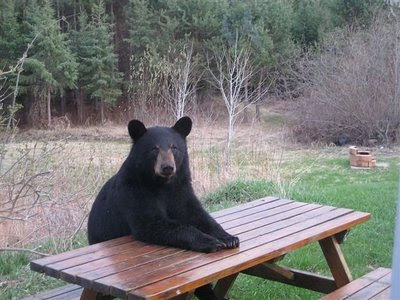
bear with me, hahaha
Ahhh, it was only 8 articles. only 8. here's the bear again, just for the hell of it
-- Knuttel

-- Knuttel
Middle Class Woes
Future hiring will mainly benefit...
So if future hiring will mainly benefit the top and bottom parts of the economy, what is going to happen to the middle?
An unhealthy middle class leads to an unhealthy national economy.
If anyone needs a refresher, the two major workers' revolutions in history (France and Russia) were both as a result of these countries lacking a solid middle class (though, I guess in irony, the middle class in Russia was kind of growing and its academia provided a solid foundation for the revolution).
Personally, it would be interesting to see if corporate America has any interest in returning the middle class jobs it shipped away, or if anyone would accept the government becoming the new middle.
I also find it interesting that I heard, it could largely be rumor, but the most available jobs right now are "skilled labor" (electricians, masons, etc), aka the job that parents worked so their kids would go to college and not have to do that kind of work for a living...
-- Knuttel
So if future hiring will mainly benefit the top and bottom parts of the economy, what is going to happen to the middle?
An unhealthy middle class leads to an unhealthy national economy.
If anyone needs a refresher, the two major workers' revolutions in history (France and Russia) were both as a result of these countries lacking a solid middle class (though, I guess in irony, the middle class in Russia was kind of growing and its academia provided a solid foundation for the revolution).
Personally, it would be interesting to see if corporate America has any interest in returning the middle class jobs it shipped away, or if anyone would accept the government becoming the new middle.
I also find it interesting that I heard, it could largely be rumor, but the most available jobs right now are "skilled labor" (electricians, masons, etc), aka the job that parents worked so their kids would go to college and not have to do that kind of work for a living...
-- Knuttel
Unfortunate news...
drugs, drugs, drugs
How is this happenning to us?
How are the drug companies able to wield so much influence?
While the cholesterol drugs are worrysome, what's really troubling me is how much the children are getting medicated now.
How am I sounding crazy saying all of this?
Worst of all, how is it legal to air ads on tv for prescription drugs? Over the counter, I can understand, but these are drugs that you need a doctor to prescribe.
You see these commercials, but you can't just walk up to a pharmacy and ask for a bottle of the stuff. No. You have to see a doctor and get him to fill a prescription. The doctor could see either the medication as unnecessary, or could even recommend a different medication that would do something similar, but the commercial has the idea planted in your head that this one is the one you have to take, and yet you can't full comprehend what it's going to do, all of the side effects, I doubt even all of the doctors and lab technicians could fully explain either.
So why is this happenning damnit?!
-- Knuttel
How is this happenning to us?
How are the drug companies able to wield so much influence?
While the cholesterol drugs are worrysome, what's really troubling me is how much the children are getting medicated now.
How am I sounding crazy saying all of this?
Worst of all, how is it legal to air ads on tv for prescription drugs? Over the counter, I can understand, but these are drugs that you need a doctor to prescribe.
You see these commercials, but you can't just walk up to a pharmacy and ask for a bottle of the stuff. No. You have to see a doctor and get him to fill a prescription. The doctor could see either the medication as unnecessary, or could even recommend a different medication that would do something similar, but the commercial has the idea planted in your head that this one is the one you have to take, and yet you can't full comprehend what it's going to do, all of the side effects, I doubt even all of the doctors and lab technicians could fully explain either.
So why is this happenning damnit?!
-- Knuttel
I guess there's egg all over their face...
Eggs
Yeah, so this story is old, so what.
Outbreaks like these shouldn't even be an issue. However, the industry itself failed.
Runny yolks should be safe to eat whenever. Runny yolks are a mainstay of soooooo many egg dishes, it's frankly just incredulous that the industry is even suggesting such a thing.
I'm not saying we should all be able to eat raw eggs whenever we want (it would be nice, a man can hope), but the fact that the industry is blaming its outbreak on how people prepared the eggs the industry shipped out, before hinting of such an outbreak, is evil and unreconcilable on so many levels.
Maybe I'll just grow my own eggs. I can get a chicken, and if it's a rooster, instead of laying eggs I'll excercise lil' jerry and put him in competitions.
-- Knuttel
Yeah, so this story is old, so what.
Outbreaks like these shouldn't even be an issue. However, the industry itself failed.
Runny yolks should be safe to eat whenever. Runny yolks are a mainstay of soooooo many egg dishes, it's frankly just incredulous that the industry is even suggesting such a thing.
I'm not saying we should all be able to eat raw eggs whenever we want (it would be nice, a man can hope), but the fact that the industry is blaming its outbreak on how people prepared the eggs the industry shipped out, before hinting of such an outbreak, is evil and unreconcilable on so many levels.
Maybe I'll just grow my own eggs. I can get a chicken, and if it's a rooster, instead of laying eggs I'll excercise lil' jerry and put him in competitions.
-- Knuttel
Iraq, after the fact, perhaps during
Was Iraq worth it, 7 years after the invasion?
Personally, I think it is too soon to tell (not mocking the Chinese Premier quoted in the 16th paragraph).
I also found the quote in the third paragraph to be a little bit humorous:
"We don't want food," said Nooriya Khalaf, 39, pointing dismissively at the small bags with rice. "We want jobs."
I realize there isn't much America can do about something like that, but I can only imagine how offended many Americans would be if that were to be the government's solution to unemployment. While technically food stamps and unemployment checks are handouts in the literal sense, they become analogous to currency and credit; i.e., you use the food stamps to buy the bag of rice, but you could exchange it for something else if you like (perhaps a bag of wheat flour, sticking with the bag of grain theme).
Anyways, I think it's too soon to tell whether or not the intervention was beneficial. It's impossible to tell when (or arguably even whether) Sadaam and the baathists would've fallen. Even the information within the article basically says that.
Regardless of support for or against the war, the troops may have finally been pulled out for good. This leaves the fate of Iraq ultimately within the hands of the Iraqis. Maybe democracy was meant to thrive there, maybe it wasn't, but at least it's been tried.
-- Knuttel
Personally, I think it is too soon to tell (not mocking the Chinese Premier quoted in the 16th paragraph).
I also found the quote in the third paragraph to be a little bit humorous:
"We don't want food," said Nooriya Khalaf, 39, pointing dismissively at the small bags with rice. "We want jobs."
I realize there isn't much America can do about something like that, but I can only imagine how offended many Americans would be if that were to be the government's solution to unemployment. While technically food stamps and unemployment checks are handouts in the literal sense, they become analogous to currency and credit; i.e., you use the food stamps to buy the bag of rice, but you could exchange it for something else if you like (perhaps a bag of wheat flour, sticking with the bag of grain theme).
Anyways, I think it's too soon to tell whether or not the intervention was beneficial. It's impossible to tell when (or arguably even whether) Sadaam and the baathists would've fallen. Even the information within the article basically says that.
Regardless of support for or against the war, the troops may have finally been pulled out for good. This leaves the fate of Iraq ultimately within the hands of the Iraqis. Maybe democracy was meant to thrive there, maybe it wasn't, but at least it's been tried.
-- Knuttel
9.06.2010
Cuba
Some interesting changes for the Cuban economy
The tourism thing shouldn't affect the mainstream Cuban economy too much. It should mostly just create some strips of beach that will turn into tourism destinations. When all is said and done, this part of the change allows foreign investors to lease land owned by the government (really, all of Cuba); the government will not sell-out the people. If, however, we begin to see large-scale renovations in downtown Havana for the sole purpose of tourism, then I would be totally wrong.
The second part seems tied to the first, though I don't know how successful that would be. I see it as an opportunity to sell their produce to tourists, but I foresee these tourism locations could become walled off cities. I dunno, I, as an American, haven't been to Cuba.
Moreso than anything else, it would be interesting to sit back and watch how this would change Cuba and its economy.
-- Knuttel
The tourism thing shouldn't affect the mainstream Cuban economy too much. It should mostly just create some strips of beach that will turn into tourism destinations. When all is said and done, this part of the change allows foreign investors to lease land owned by the government (really, all of Cuba); the government will not sell-out the people. If, however, we begin to see large-scale renovations in downtown Havana for the sole purpose of tourism, then I would be totally wrong.
The second part seems tied to the first, though I don't know how successful that would be. I see it as an opportunity to sell their produce to tourists, but I foresee these tourism locations could become walled off cities. I dunno, I, as an American, haven't been to Cuba.
Moreso than anything else, it would be interesting to sit back and watch how this would change Cuba and its economy.
-- Knuttel
Subscribe to:
Posts (Atom)